




Bozok Museum-Reserve
Archaeological Collection
The archaeological collection of the Bozok State Historical and Cultural Museum-Reserve is an important part of the museum holdings. It reflects Kazakhstan’s centuries-old history and cultural heritage and is continually expanded through research at the Bozok settlement and other historical and archaeological sites in the country.
Ceramic Vessels
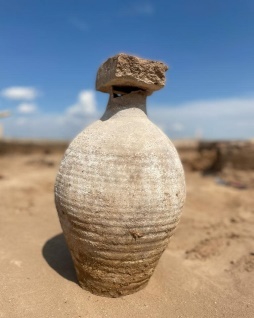 01
01
Archaeological Jug with Natural Bitumen
Description and specifications
- Date
- 14th–15th centuries
- Place of origin
- Medieval Bitygai site, Korgalzhyn District, Akmola Region, 2022.
- Description
- A hand-built jug for liquids. The rim is slightly flared, the neck is short and curved, the body is globular, and the handle is L-shaped. The clay is well levigated; the surface is burnished and fired without added temper.
- Material
- Clay, bitumen.
- Technique
- Hand-forming, firing.
- Dimensions
- Height: 39.5 cm
Neck diameter: 7.5/ 8.5 cm
Body diameter: 25/26 cm
Base: 15.5 × 16 cm
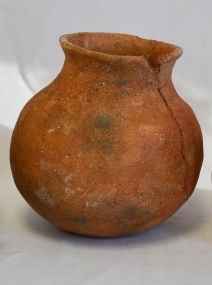 02
02
Ceramic Vessel
Description and specifications
- Date
- 5th century BCE
- Place of origin
- Burkhan burial ground, Almaty Region, Kazakhstan. Transferred in 2021 by the M. Tynyshpaev Almaty Regional Museum of History and Local Lore.
- Description
- A ceramic vessel made of fired clay. The body is broad and the mouth is narrow. The neck is short and the body is globular; the rim is slightly flared outward. The base is rounded. The form and surface treatment are uneven, indicating hand manufacture.
- Material
- Clay.
- Technique
- Hand-forming, firing.
- Dimensions
- 16 × 9.5 cm
- Weight
- 650 g
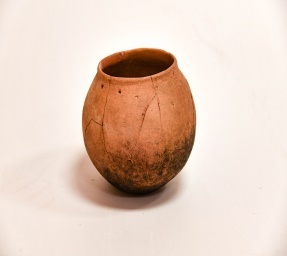 03
03
Clay Vessel
Description and specifications
- Date
- 5th century BCE
- Place of origin
- Burkhan burial ground, Almaty Region, Kazakhstan. Transferred in 2021 by the M. Tynyshpaev Almaty Regional Museum of History and Local Lore.
- Description
- Made of fired clay. The vessel has a narrow mouth and broad sides. The neck is short and globular, while the rim is round and projects outward.
- Material
- Clay.
- Technique
- Hand-forming, firing.
- Dimensions
- 21.5 × 9.6 cm
Stone Tools and Stone Sculpture
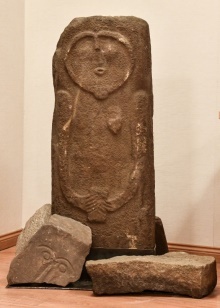 04
04
Stone Sculpture
Description and specifications
- Date
- 9th–10th centuries
- Place of origin
- Turkic Archaeological and Ethnographic Complex “Qumai”, Yereymentau District, Akmola Region.
- Description
- A monumental anthropomorphic stone sculpture of a human figure shown full-length, carved from a single stone block. Facial features are rendered in relief; the hands are indicated on the front face.
- Material
- Stone.
- Technique
- Carving, dressing, stone carving.
- Dimensions
- Overall height: 113 cm
Head height: 43 cm
Shoulder width: 44.5 cm
Body height: 45 cm
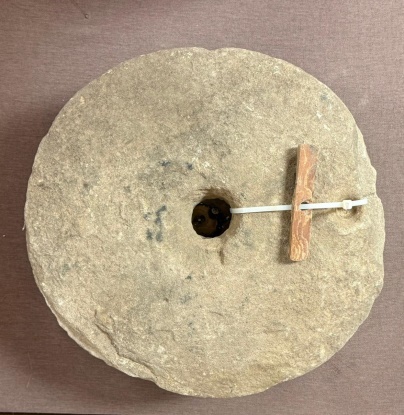 11
11
Hand Mill
Description and specifications
- Date
- 11th–12th centuries
- Place of origin
- Aktobe Region, Mughalzhar District. The mill belonged to the family of D. Kuzenbayev and entered the museum collection in 2022.
- Description
- The hand mill consists of two round stone discs, upper and lower, with central holes for grain and the handle. When the upper stone is turned by hand, grain is ground between the stones into flour. The milled grain collects beneath the lower stationary stone.
- Material
- Stone.
- Technique
- Dressing, grinding, drilling, carving, stone selection, notching, fitting, assembly.
- Dimensions
- Diameter: 36 cm
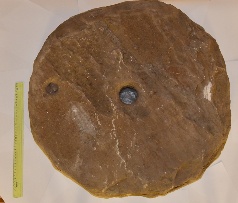 12
12
Hand Mill
Description and specifications
- Date
- 11th–12th centuries
- Place of origin
- Northwestern sector of Excavation 1 at the Bitygai site, Korgalzhyn District, Akmola Region.
- Description
- A round stone disc with a central opening and a socket for a handle. Archaeological research shows that the mill was used not only for grinding grain, but also for crushing quartzite and other mineral components for ganch and glaze mixtures, as well as for making bricks and architectural finishing elements.
- Material
- Stone.
- Technique
- Dressing, grinding, drilling, carving, stone selection, notching, fitting, assembly.
- Dimensions
- Diameter: 70 cm
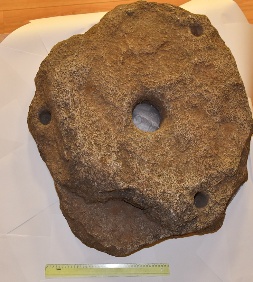 13
13
Hand Mill
Description and specifications
- Date
- 11th–12th centuries
- Place of origin
- Medieval settlement of Bitygai, Korgalzhyn District, Akmola Region; found in the northwestern sector of Excavation 1.
- Description
- Archaeological research indicates that millstones of this type at the Bitygai production complex were used not only for grinding grain, but also for crushing construction materials. This stone mill served to crush quartzite and other mineral components used to prepare ganch and glaze mixtures.
- Material
- Stone.
- Technique
- Dressing, grinding, drilling, carving, stone selection, notching, fitting, assembly.
- Dimensions
- Diameter: 72/75 cm
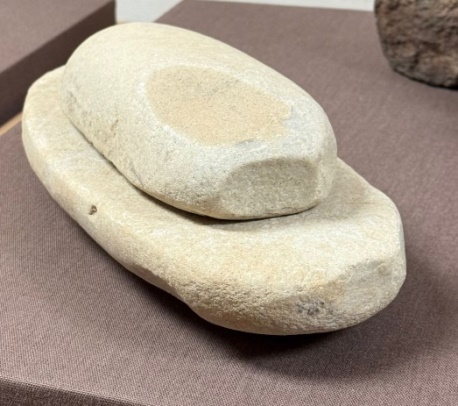 15
15
Grinding Stone
Description and specifications
- Date
- 6th–2nd centuries BCE
- Place of origin
- Shizhaga settlement, Kyzylorda Region.
- Description
- The grinding stone consists of two stone elements: a lower oval-rectangular slab with a shallow working surface and an oval upper rubbing stone. Their working surfaces are smoothed and bear traces of prolonged use from grinding grain. The light-grey stone surface was roughly dressed and subsequently worn naturally. The object was used by hand to process cereals into flour, groats, and plant foods.
- Material
- Stone.
- Technique
- Dressing, pecking, grinding.
- Dimensions
- 30 × 13.5 × 4 cm
Non-Ferrous Metal Belt Plaques
 16
16
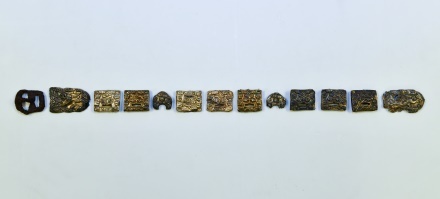
Composite Belt Ornaments
Description and specifications
- Date
- 7th–3rd centuries BCE
- Place of origin
- Karazhuldyz burial ground, Kyzylorda Region.
- Description
- Rectangular belt plaques with low-relief ornament and an image of a lotus flower.
- Material
- Silver.
- Technique
- Casting, forging, stamping, embossing, engraving.
- Dimensions
- 3.5 × 3 cm
 17
17
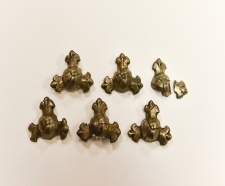
Silver Divider Plaques
Description and specifications
- Date
- 7th–3rd centuries BCE
- Place of origin
- Karazhuldyz burial ground, Kyzylorda Region.
- Description
- Silver shaped, convex plaques in the form of an eternity knot, with three projecting lotus-flower lobes.
- Material
- Silver.
- Technique
- Casting, forging, stamping, embossing, engraving.
- Dimensions
- 4.7 × 3.5 cm
 18
18
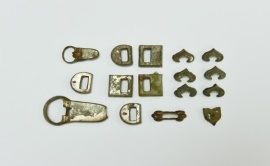
Components of a Composite Belt
Description and specifications
- Date
- 7th–3rd centuries BCE
- Place of origin
- Karazhuldyz burial ground, Kyzylorda Region.
- Description
- Silver buckles, clamps, plaques, and belt tips of various shapes.
- Material
- Silver.
- Technique
- Casting, forging, stamping, embossing, engraving.
- Dimensions
- 2.6 × 2.2 cm; 2.5 × 2 cm
Weapons
 19
19
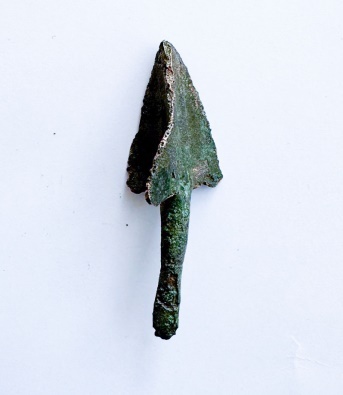
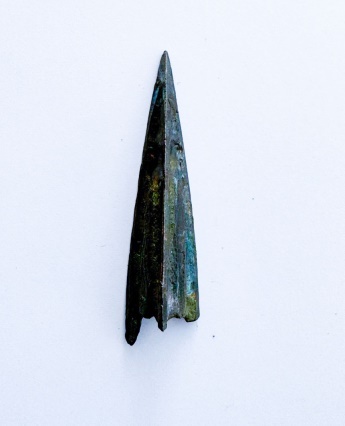
Arrowhead
Description and specifications
- Date
- 6th–5th centuries BCE
- Place of origin
- Almaty Region.
- Description
- Socketed, trilobate arrowhead with blades projecting beyond the socket. The socket is convex.
- Material
- Bronze.
- Technique
- Casting, forging.
- Dimensions
- Length: 4.6 cm
Width: 1.4 cm - Weight
- 5 g
 20
20
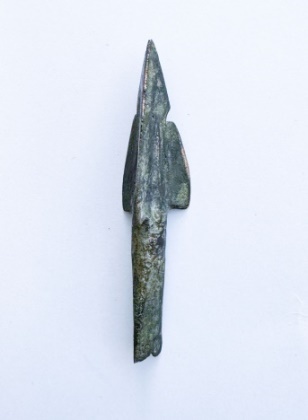
Arrowhead
Description and specifications
- Date
- 6th–5th centuries BCE
- Place of origin
- Almaty Region.
- Description
- Socketed, trilobate arrowhead with blades projecting beyond the socket. The socket is broken.
- Material
- Bronze.
- Technique
- Casting, forging.
- Dimensions
- Length: 2.9 cm
Width: 0.7 cm - Weight
- 2.29 g
 21
21
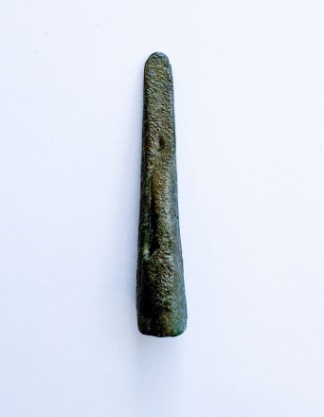
Arrowhead
Description and specifications
- Date
- 6th–5th centuries BCE
- Place of origin
- Almaty Region.
- Description
- Socketed, trilobate arrowhead. The point is triangular and the blades are faceted and sharp. The lower parts of the blades project outward; the socket is long and flattened.
- Material
- Bronze.
- Technique
- Casting, forging.
- Dimensions
- Length: 6 cm
Width: 1.3 cm - Weight
- 9.52 g
 22
22
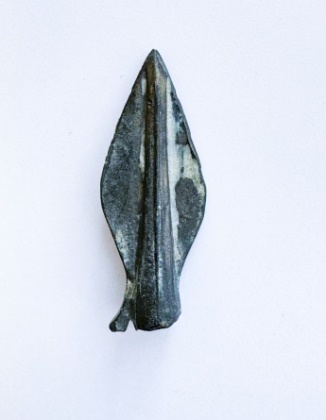
Arrowhead
Description and specifications
- Date
- 6th–5th centuries BCE
- Place of origin
- Almaty Region.
- Description
- Socketed arrowhead with a flattened point and a convex rounded-oval socket.
- Material
- Bronze.
- Technique
- Casting, forging.
- Dimensions
- Length: 4.8 cm
Width: 0.9 cm - Weight
- 7.17 g
 23
23
Arrowhead
Description and specifications
- Date
- 6th–5th centuries BCE
- Place of origin
- Almaty Region.
- Description
- Socketed, bilobate arrowhead with a faceted point. One side of the short socket is chipped at the lower part.
- Material
- Bronze.
- Technique
- Casting, forging.
- Dimensions
- Length: 4.3 cm
Width: 1.5 cm - Weight
- 5.80 g
 24
24
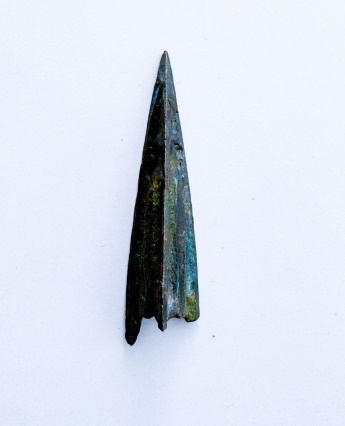
Arrowhead
Description and specifications
- Date
- 6th–5th centuries BCE
- Place of origin
- Almaty Region.
- Description
- Socketed, trilobate arrowhead. The point is triangular and the blades are faceted and sharp. It is elongated, with a short socket; the ends of the blades are formed as hook-shaped barbs.
- Material
- Bronze.
- Technique
- Casting, forging.
- Dimensions
- Length: 4.5 cm
Width: 1 cm - Weight
- 4.77 g
 25
25
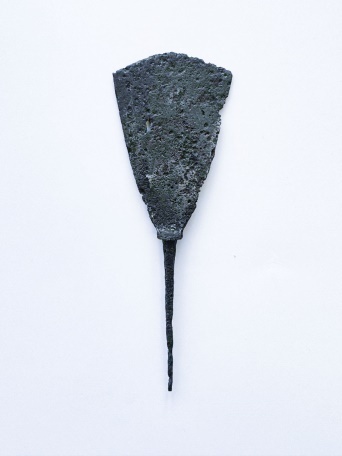
Arrowhead
Description and specifications
- Date
- 13th–15th centuries
- Place of origin
- Almaty Region.
- Description
- Tanged arrowhead with an elongated triangular blade, straight side edges, and an extended point. The tang is long, narrow, and round in cross-section.
- Material
- Iron.
- Technique
- Casting, forging.
- Dimensions
- Length: 12.4 cm
Width: 4.2 cm - Weight
- 15.2 g
 26
26
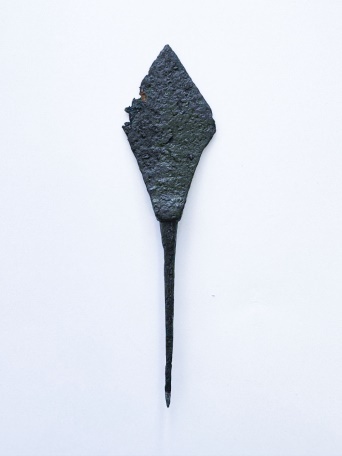
Arrowhead
Description and specifications
- Date
- 13th–15th centuries
- Place of origin
- Almaty Region.
- Description
- Lozenge-shaped, pointed, double-edged, and two-faceted. The point is sharp; the shoulders slope down to the tang. The tang is elongated and round in cross-section.
- Material
- Iron.
- Technique
- Casting, forging.
- Dimensions
- Length: 11.7 cm
Width: 3 cm - Weight
- 17.7 g
 27
27
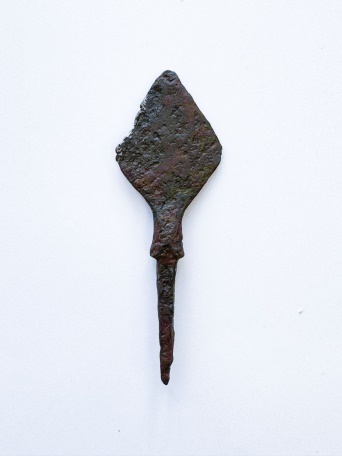
Arrowhead
Description and specifications
- Date
- 13th–15th centuries
- Place of origin
- Almaty Region.
- Description
- Lozenge-shaped, pointed, double-edged, and two-faceted. The point is sharp; the shoulders slope down to the tang. The tang is elongated and round in cross-section.
- Material
- Iron.
- Technique
- Casting, forging.
- Dimensions
- Length: 6.8 cm
Width: 2 cm - Weight
- 5.5 g
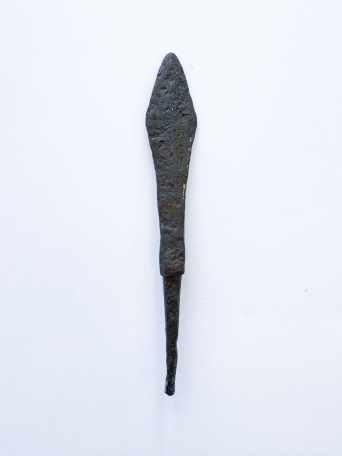 28
28
Arrowhead
Description and specifications
- Date
- 13th–15th centuries
- Place of origin
- Almaty Region.
- Description
- Spear-shaped, pointed, double-edged, and two-faceted. The point is sharp; the shoulders slope down to the tang. The tang is elongated and round in cross-section.
- Material
- Iron.
- Technique
- Casting, forging.
- Dimensions
- Length: 8.6 cm
Width: 1.3 cm - Weight
- 11.3 g
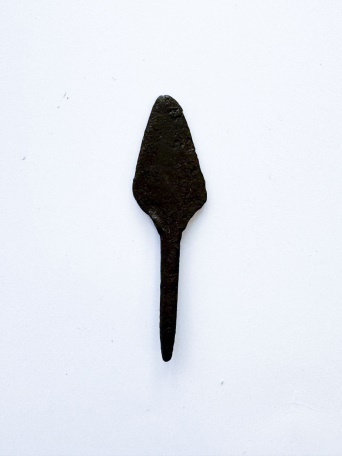 29
29
Arrowhead
Description and specifications
- Date
- 13th–15th centuries
- Place of origin
- Almaty Region.
- Description
- Spear-shaped, pointed, double-edged, and two-faceted. The point is sharp; the shoulders slope down to the tang. The tang is elongated and round in cross-section.
- Material
- Iron.
- Technique
- Casting, forging.
- Dimensions
- Length: 5.1 cm
Width: 1.4 cm - Weight
- 3.8 g
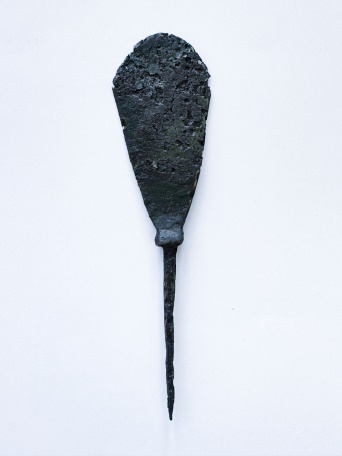 30
30
Arrowhead
Description and specifications
- Date
- 13th–15th centuries
- Place of origin
- Almaty Region.
- Description
- Lozenge-shaped, pointed, double-edged, and two-faceted. The point is rounded; the shoulders slope down to the tang. The tang is elongated and round in cross-section.
- Material
- Iron.
- Technique
- Casting, forging.
- Dimensions
- Length: 15.3 cm
Width: 3.8 cm - Weight
- 30.7 g
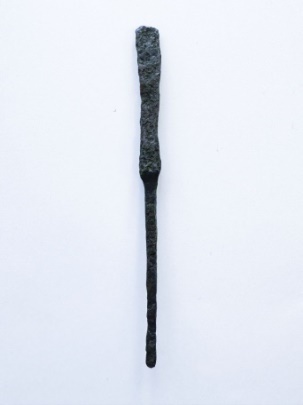 31
31
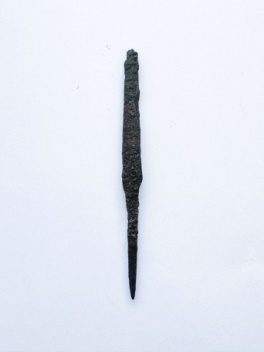
Arrowhead
Description and specifications
- Date
- 13th–15th centuries
- Place of origin
- Almaty Region.
- Description
- Chisel-needle-shaped and double-edged. The facets are sharp and the blade is placed at the very tip. The shoulders slope down to the tang. It is elongated, with a prominent sharp cross-section.
- Material
- Iron.
- Technique
- Casting, forging.
- Dimensions
- Length: 9 cm
Width: 0.6 cm - Weight
- 6.1 g
 32
32
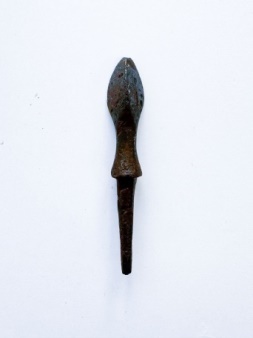
Arrowhead
Description and specifications
- Date
- 13th–15th centuries
- Place of origin
- Almaty Region.
- Description
- Needle-shaped and double-edged, with sharp facets and a blade at the tip. The shoulders slope down to the tang. It is elongated, with a prominent sharp cross-section.
- Material
- Iron.
- Technique
- Casting, forging.
- Dimensions
- Length: 7.3 cm
Width: 0.6 cm - Weight
- 4 g
 33
33
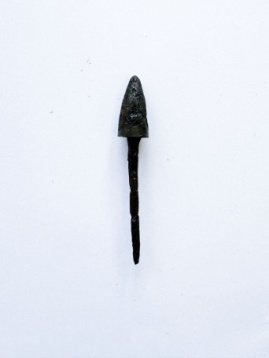
Arrowhead
Description and specifications
- Date
- 13th–15th centuries
- Place of origin
- Almaty Region.
- Description
- Three-sided and sharp. The shoulders slope down to the tang; the piece is elongated and the tang is round in cross-section.
- Material
- Iron.
- Technique
- Casting, forging.
- Dimensions
- Length: 5.2 cm
Width: 0.8 cm - Weight
- 6.8 g
 34
34
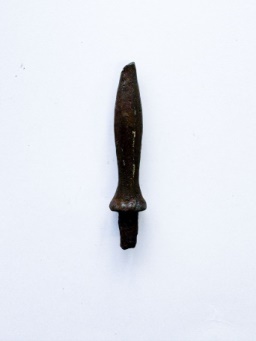
Arrowhead
Description and specifications
- Date
- 13th–15th centuries
- Place of origin
- Almaty Region.
- Description
- The point is cast rounded. It is bullet-shaped and sharp. The shoulders slope down to the tang; the piece is elongated and the tang is round in cross-section.
- Material
- Iron.
- Technique
- Casting, forging.
- Dimensions
- Length: 4.3 cm
Width: 0.6 cm - Weight
- 2.3 g
 35
35
Arrowhead
Description and specifications
- Date
- 13th–15th centuries
- Place of origin
- Almaty Region.
- Description
- The point is rounded. It is bullet-shaped, with a broken socket. The shoulders slope down to the tang; the piece is elongated and the tang is round in cross-section.
- Material
- Iron.
- Technique
- Casting, forging.
- Dimensions
- Length: 4.2 cm
Width: 0.8 cm - Weight
- 6 g
 36
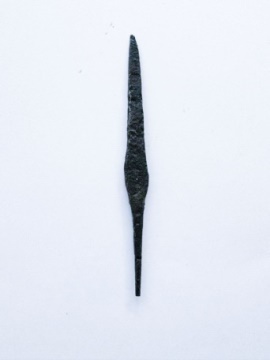
36
Arrowhead
Description and specifications
- Date
- 13th–15th centuries
- Place of origin
- Almaty Region.
- Description
- Needle-shaped and double-edged, with sharp facets. The blade is placed at the tip and the shoulders slope down to the tang. The cross-section is prominent and sharp.
- Material
- Iron.
- Technique
- Casting, forging.
- Dimensions
- Length: 7 cm
Width: 0.6 cm - Weight
- 3.2 g
 37
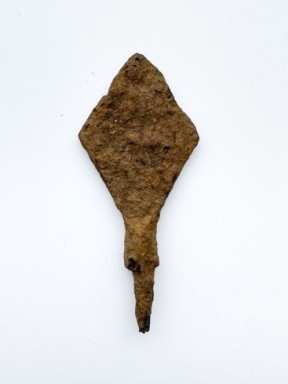
37
Arrowhead
Description and specifications
- Date
- 13th–15th centuries
- Place of origin
- Almaty Region.
- Description
- Lozenge-shaped and double-edged, with a sharp point. The shoulders slope downward; the tang is short and round in cross-section.
- Material
- Iron.
- Technique
- Casting, forging.
- Dimensions
- Length: 7.5 cm
Width: 3.3 cm - Weight
- 19 g
 39
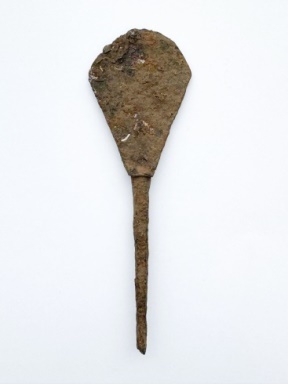
39
Arrowhead
Description and specifications
- Date
- 13th–15th centuries
- Place of origin
- Almaty Region.
- Description
- Lozenge-shaped and double-edged, with a sharp point. The shoulders slope down to the elongated tang, which is round in cross-section.
- Material
- Iron.
- Technique
- Casting, forging.
- Dimensions
- Length: 12.2 cm
Width: 3.9 cm - Weight
- 28.7 g
 40
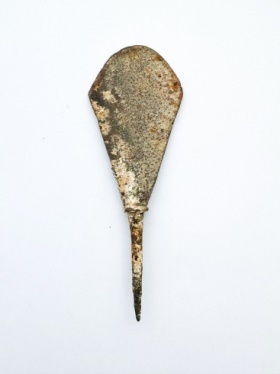
40
Arrowhead
Description and specifications
- Date
- 13th–15th centuries
- Place of origin
- Almaty Region.
- Description
- Lozenge-shaped and double-edged, with a sharp point. The shoulders slope down to the elongated tang, which is round in cross-section.
- Material
- Iron.
- Technique
- Casting, forging.
- Dimensions
- Length: 9.8 cm
Width: 3.4 cm - Weight
- 20 g
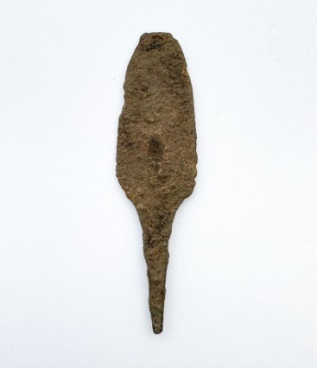 41
41
Arrowhead
Description and specifications
- Date
- 13th–15th centuries
- Place of origin
- Almaty Region.
- Description
- Leaf-shaped and double-edged. The point is broken and deformed. The shoulders slope down to the elongated tang, which is round in cross-section.
- Material
- Iron.
- Technique
- Casting, forging.
- Dimensions
- Length: 9 cm
Width: 2.2 cm - Weight
- 15.3 g
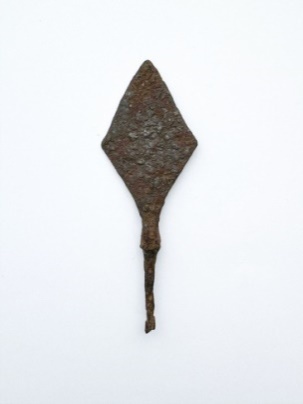 42
42
Arrowhead
Description and specifications
- Date
- 13th–15th centuries
- Place of origin
- Almaty Region.
- Description
- Lozenge-shaped and double-edged, with a sharp point. The shoulders slope down to the elongated tang, which is round in cross-section.
- Material
- Iron.
- Technique
- Casting, forging.
- Dimensions
- Length: 10 cm
Width: 3.6 cm - Weight
- 17.4 g
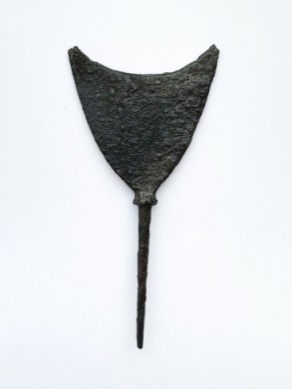 43
43
Arrowhead
Description and specifications
- Date
- 13th–15th centuries
- Place of origin
- Almaty Region.
- Description
- Lamb-shoulder-blade shaped and double-edged, with a sharp point. The shoulders slope down to the elongated tang, which is round in cross-section.
- Material
- Iron.
- Technique
- Casting, forging.
- Dimensions
- Length: 11.7 cm
Width: 6.1 cm - Weight
- 28.3 g
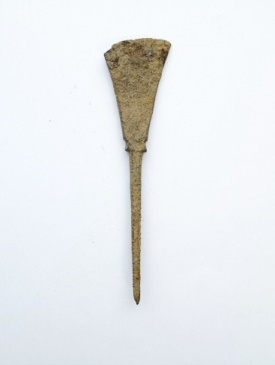 44
44
Arrowhead
Description and specifications
- Date
- 13th–15th centuries
- Place of origin
- Almaty Region.
- Description
- Leaf-shaped and double-edged. The point is broken and deformed. The shoulders slope down to the elongated tang, which is round in cross-section.
- Material
- Iron.
- Technique
- Casting, forging.
- Dimensions
- Length: 9 cm
Width: 2.2 cm - Weight
- 11.2 g
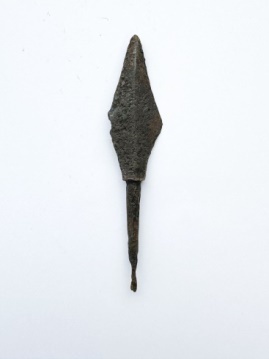 45
45
Arrowhead
Description and specifications
- Date
- 13th–15th centuries
- Place of origin
- Almaty Region.
- Description
- Lozenge-shaped and double-edged, with a sharp point. The shoulders slope down to the elongated tang, which is round in cross-section.
- Material
- Iron.
- Technique
- Casting, forging.
- Dimensions
- Length: 8.2 cm
Width: 1.8 cm - Weight
- 11.4 g
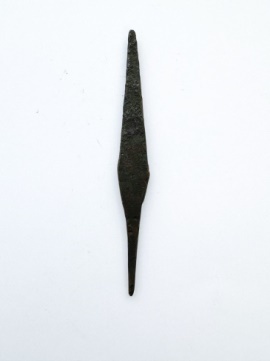 46
46
Arrowhead
Description and specifications
- Date
- 13th–15th centuries
- Place of origin
- Almaty Region.
- Description
- Needle-shaped and double-edged. The cutting part is at the point. The shoulders slope down to the tang; the cross-section is prominent and sharp.
- Material
- Iron.
- Technique
- Casting, forging.
- Dimensions
- Length: 7.8 cm
Width: 1 cm
Weight: 7.8 g
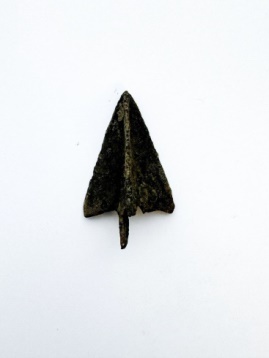 47
47
Arrowhead
Description and specifications
- Date
- 13th–15th centuries
- Place of origin
- Almaty Region.
- Description
- Three-sided and sharp. The tang is absent. The socket is short and the cross-section is damaged. The object originally consisted of two parts, one of which is lost.
- Material
- Iron.
- Technique
- Casting, forging.
- Dimensions
- Length: 3.4 cm
Width: 1.8 cm - Weight
- 4.2 g
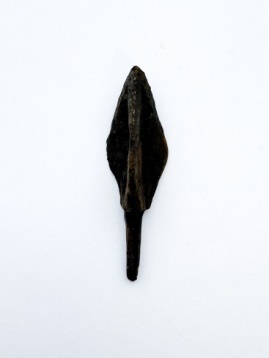 48
48
Arrowhead
Description and specifications
- Date
- 13th–15th centuries
- Place of origin
- Almaty Region.
- Description
- Three-sided and sharp, with a pointed tip. The shoulders slope down to a medium-length tang that is round in cross-section.
- Material
- Iron.
- Technique
- Casting, forging.
- Dimensions
- Length: 5.8 cm
Width: 1.5 cm - Weight
- 9.7 g
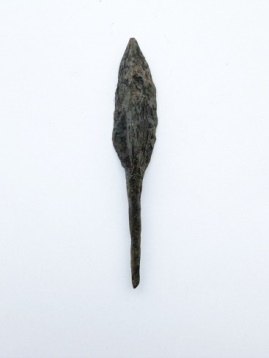 49
49
Arrowhead
Description and specifications
- Date
- 13th–15th centuries
- Place of origin
- Almaty Region.
- Description
- Three-sided and sharp. The shoulders slope down to an elongated tang that is oval in cross-section.
- Material
- Iron.
- Technique
- Casting, forging.
- Dimensions
- Length: 6.7 cm
Width: 1.1 cm - Weight
- 11.4 g
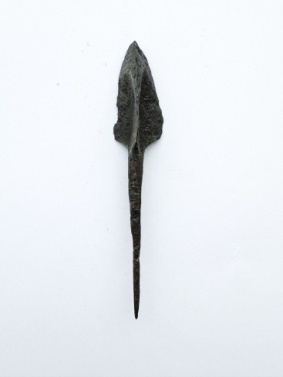 50
50
Arrowhead
Description and specifications
- Date
- 13th–15th centuries
- Place of origin
- Almaty Region.
- Description
- Three-sided and sharp. The shoulders slope down to an elongated tang.
- Material
- Iron.
- Technique
- Casting, forging.
- Dimensions
- Length: 7.8 cm
Width: 1.5 cm - Weight
- 7.8 g
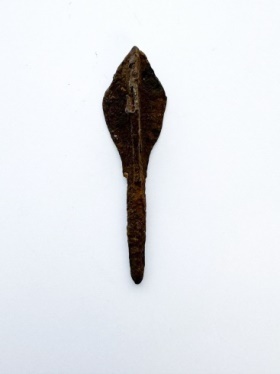 51
51
Arrowhead
Description and specifications
- Date
- 13th–15th centuries
- Place of origin
- Almaty Region.
- Description
- Three-sided and sharp. The shoulders slope down to an elongated tang.
- Material
- Iron.
- Technique
- Casting, forging.
- Dimensions
- Length: 5 cm
Width: 1.3 cm - Weight
- 4.6 g
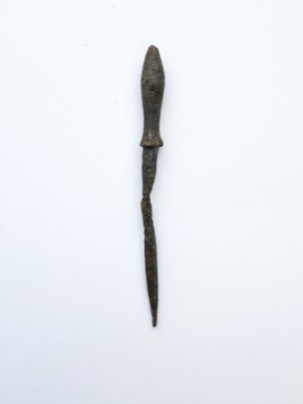 52
52
Arrowhead
Description and specifications
- Date
- 13th–15th centuries
- Place of origin
- Almaty Region.
- Description
- The point is rounded. It is bullet-shaped and sharp. The shoulders slope down to the tang; the middle part is elongated and deformed. The tang is round in cross-section.
- Material
- Iron.
- Technique
- Casting, forging.
- Dimensions
- Length: 8.4 cm
Width: 0.7 cm - Weight
- 8.1 g
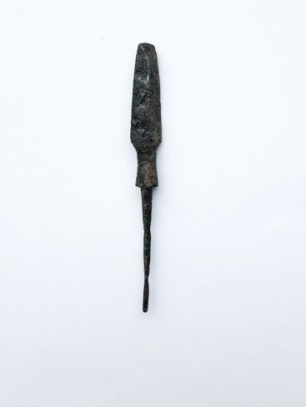 53
53
Arrowhead
Description and specifications
- Date
- 13th–15th centuries
- Place of origin
- Almaty Region.
- Description
- Needle-lozenge-shaped, sharp, and four-faceted. The cutting part is at the point. The shoulders slope down to the tang; the cross-section is prominent and sharp.
- Material
- Iron.
- Technique
- Casting, forging.
- Dimensions
- Length: 7.8 cm
Width: 0.9 cm - Weight
- 7.5 g
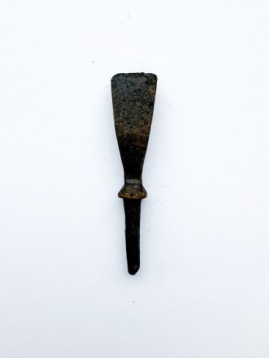 54
54
Arrowhead
Description and specifications
- Date
- 13th–15th centuries
- Place of origin
- Almaty Region.
- Description
- Lozenge-shaped and double-edged, with substantial blades and a pointed tip. The shoulders slope down; the tang is thick, short, and round in cross-section.
- Material
- Iron.
- Technique
- Casting, forging.
- Dimensions
- Length: 4.9 cm
Width: 1.1 cm - Weight
- 9.2 g
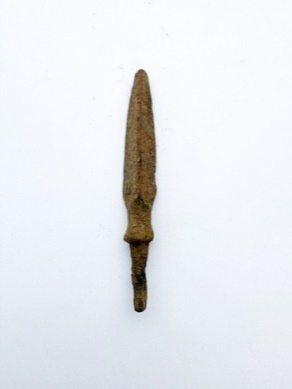 55
55
Arrowhead
Description and specifications
- Date
- 13th–15th centuries
- Place of origin
- Almaty Region.
- Description
- Three-sided and sharp. The shoulders slope down to the tang. The object is short, with a slightly curved tang.
- Material
- Iron.
- Technique
- Casting, forging.
- Dimensions
- Length: 4.9 cm
Width: 0.7 cm - Weight
- 5.2 g
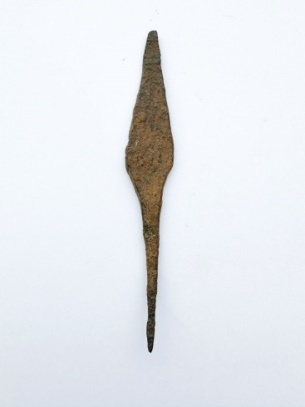 56
56
Arrowhead
Description and specifications
- Date
- 13th–15th centuries
- Place of origin
- Almaty Region.
- Description
- Lozenge-shaped and double-edged. The blade is at the point. The shoulders slope down to the elongated tang; the cross-section is prominent and flattened.
- Material
- Iron.
- Technique
- Casting, forging.
- Dimensions
- Length: 7.7 cm
Width: 1.2 cm - Weight
- 5.7 g
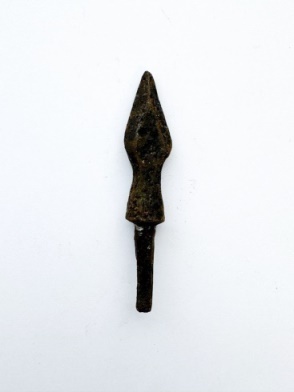 57
57
Arrowhead
Description and specifications
- Date
- 13th–15th centuries
- Place of origin
- Almaty Region.
- Description
- Conical, double-edged, and of solid casting. The point is sharp. The shoulders slope down; the tang is of medium length.
- Material
- Iron.
- Technique
- Casting, forging.
- Dimensions
- Length: 4.3 cm
Width: 0.7 cm - Weight
- 4.6 g
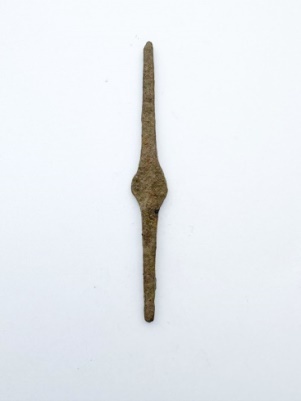 58
58
Arrowhead
Description and specifications
- Date
- 13th–15th centuries
- Place of origin
- Almaty Region.
- Description
- Needle-shaped and double-edged. The blade is at the point. The shoulders slope down to the tang. The middle section has been widened and flattened by forging; the cross-section is prominent and sharp.
- Material
- Iron.
- Technique
- Casting, forging.
- Dimensions
- Length: 7.6 cm
Width: 1 cm - Weight
- 5 g
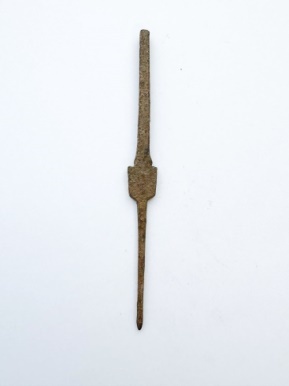 59
59
Arrowhead
Description and specifications
- Date
- 13th–15th centuries
- Place of origin
- Almaty Region.
- Description
- Needle-shaped and double-edged. The blade is at the point. The shoulders slope down to the tang. The middle section has been widened and flattened by forging.
- Material
- Iron.
- Technique
- Casting, forging.
- Dimensions
- Length: 9.3 cm
Width: 0.9 cm - Weight
- 5.9 g
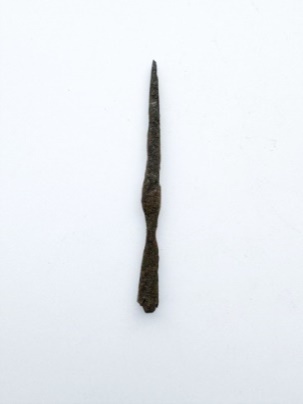 60
60
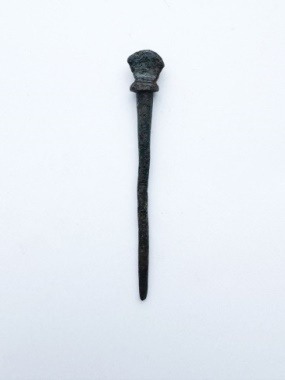
Arrowhead
Description and specifications
- Date
- 13th–15th centuries
- Place of origin
- Almaty Region.
- Description
- Four-faceted, spear-shaped, and sharp. It has no cutting edge. Type: socketed. Functional type: armour-piercing.
- Material
- Iron.
- Technique
- Casting, forging.
- Dimensions
- Length: 5.5 cm
Width: 0.4 cm - Weight
- 2.5 g
 61
61
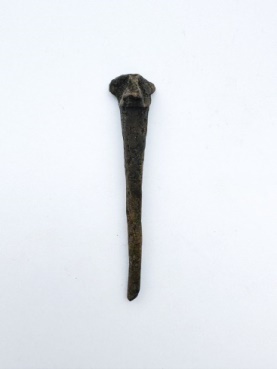
Arrowhead
Description and specifications
- Date
- 13th–15th centuries
- Place of origin
- Almaty Region.
- Description
- Double-edged and sharp. The shoulders slope down to the elongated tang, which is round in cross-section.
- Material
- Iron.
- Technique
- Casting, forging.
- Dimensions
- Length: 6.1 cm
Width: 0.9 cm
Combat part: 1 cm - Weight
- 3.5 g
 62
62
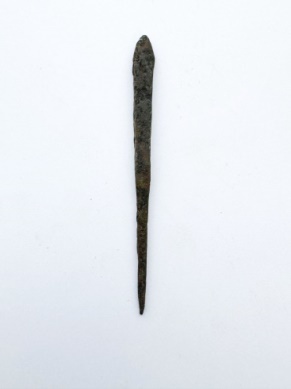
Arrowhead
Description and specifications
- Date
- 13th–15th centuries
- Place of origin
- Almaty Region.
- Description
- Three-sided. The shoulders slope down to the elongated tang, which is round in cross-section.
- Material
- Iron.
- Technique
- Casting, forging.
- Dimensions
- Length: 5.3 cm
Width: 0.9 cm
Cutting edge: 0.7 cm - Weight
- 4.6 g
 63
63
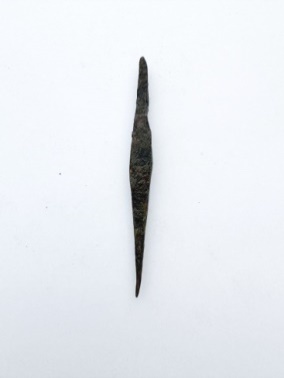
Arrowhead
Description and specifications
- Date
- 13th–15th centuries
- Place of origin
- Almaty Region.
- Description
- Needle-shaped, double-edged, with a sharp point. The shoulders slope down to the tang. The middle section has been widened and flattened by forging; the cross-section is prominent and sharp.
- Material
- Iron.
- Technique
- Casting, forging.
- Dimensions
- Length: 6.1 cm
Width: 0.5 cm - Weight
- 2.8 g
 64
64
Arrowhead
Description and specifications
- Date
- 13th–15th centuries
- Place of origin
- Almaty Region.
- Description
- Needle-shaped, four-faceted, with a sharp point. The blade is at the very tip. The shoulders slope down to the tang. The middle section has been widened and flattened by forging; the cross-section is prominent and sharp.
- Material
- Iron.
- Technique
- Casting, forging.
- Dimensions
- Length: 5.2 cm
Width: 0.5 cm - Weight
- 2.5 g
 65
65
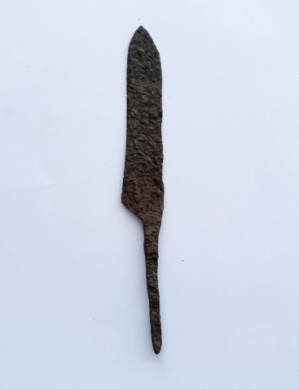
Knife
Description and specifications
- Date
- 19th–20th centuries
- Place of origin
- Almaty Region.
- Description
- Single-edged knife with a lenticular blade that narrows toward the point. The handle tang is elongated and narrow in cross-section. The blade is sharp.
- Material
- Iron.
- Technique
- Casting, forging.
- Dimensions
- Overall length: 17 cm
Blade length: 9.8 cm
Width: 2.3 cm - Weight
- 29 g
 66
66
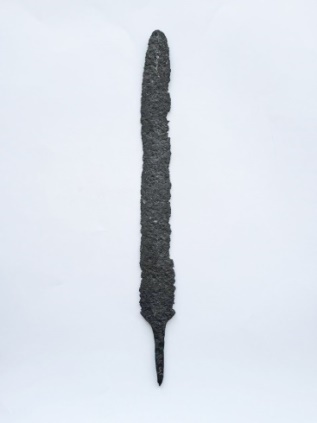
Dagger
Description and specifications
- Date
- 15th–16th centuries
- Place of origin
- Almaty Region.
- Description
- Double-edged dagger with a lenticular blade that narrows toward the point. The tang is short and slightly flattened in cross-section. The blade is sharp and notched in places.
- Material
- Iron.
- Technique
- Casting, forging.
- Dimensions
- Overall length: 31 cm
Blade length: 25 cm
Handle length: 6 cm
Width: 3.4 cm - Weight
- 94 g
 67
67
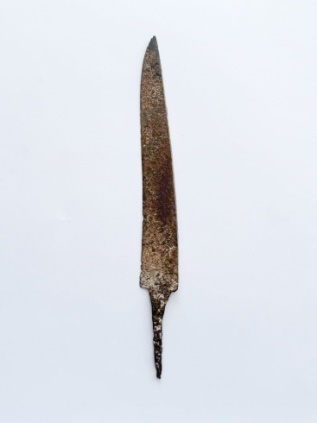
Knife
Description and specifications
- Date
- 19th–20th centuries
- Place of origin
- Almaty Region.
- Description
- Single-edged knife with a lenticular blade that narrows toward the point. The handle tang is elongated and narrow in cross-section. The blade is sharp.
- Material
- Iron.
- Technique
- Casting, forging.
- Dimensions
- Overall length: 13.1 cm
Blade length: 10 cm
Width: 1.7 cm - Weight
- 20.8 g
 68
68
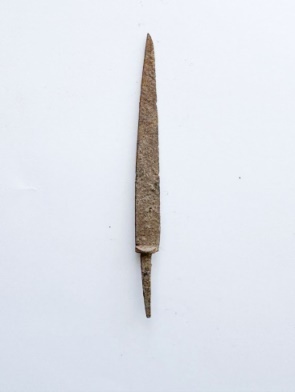
Knife
Description and specifications
- Date
- 19th–20th centuries
- Place of origin
- Almaty Region.
- Description
- Single-edged knife with a lenticular blade that narrows toward the point. The handle tang is elongated and narrow in cross-section. The blade is sharp.
- Material
- Iron.
- Technique
- Casting, forging.
- Dimensions
- Overall length: 10.4 cm
Blade length: 7.9 cm
Width: 1 cm - Weight
- 6.4 g
 69
69
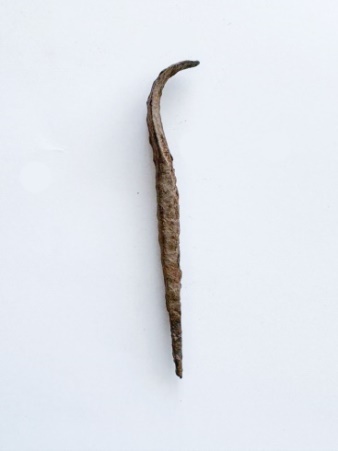
Knife
Description and specifications
- Date
- 19th–20th centuries
- Place of origin
- Almaty Region.
- Description
- Single-edged knife that narrows toward the point. The tip is forged into a curved, hook-like form. It is a woodworking tool for hollowing; the handle tang is elongated and narrow in cross-section. The blade is sharp.
- Material
- Iron.
- Technique
- Casting, forging.
- Dimensions
- Overall length: 11.4 cm
Blade length: 3.4 cm
Width: 1.7 cm
Handle length: 8.2 cm - Weight
- 28.9 g
 70
70
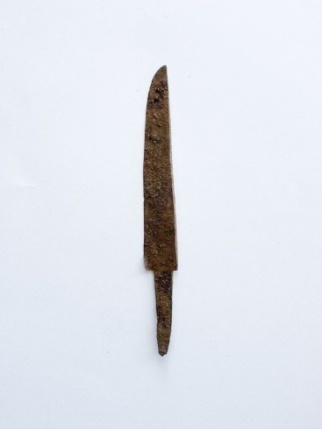
Knife
Description and specifications
- Date
- 19th–20th centuries
- Place of origin
- Almaty Region.
- Description
- Single-edged knife with a lenticular blade that narrows toward the point. The handle tang is elongated and narrow in cross-section. The blade is sharp.
- Material
- Iron.
- Technique
- Casting, forging.
- Dimensions
- Overall length: 11.4 cm
Blade length: 8 cm
Width: 1.4 cm - Weight
- 11.3 g
